
Wind-Assisted Propulsion Systems for Shipping Decarbonization
- GMOS WORLD

- Dec 9, 2025
- 4 min read

Shipping companies face unprecedented regulatory pressure, rising fuel costs, and increasing stakeholder demand for cleaner operations. As the industry shifts toward alternative fuels, uncertainty continues, especially when comparing investment costs, infrastructure gaps, and operational practicality. Many vessels still rely heavily on fossil fuels, and efficiency measures alone are not enough to meet future emission goals.
Meanwhile, the cost of transition strategies like e-methanol, ammonia, or hydrogen remains high, and global bunkering infrastructure is still developing. In this context, wind-assisted propulsion is gaining attention, not as a replacement, but as a bridging solution to quickly and cost-effectively reduce carbon intensity.
This article explores wind-assisted propulsion technologies, real-world applications, and the challenges shaping their adoption.
1. Rotor Sails
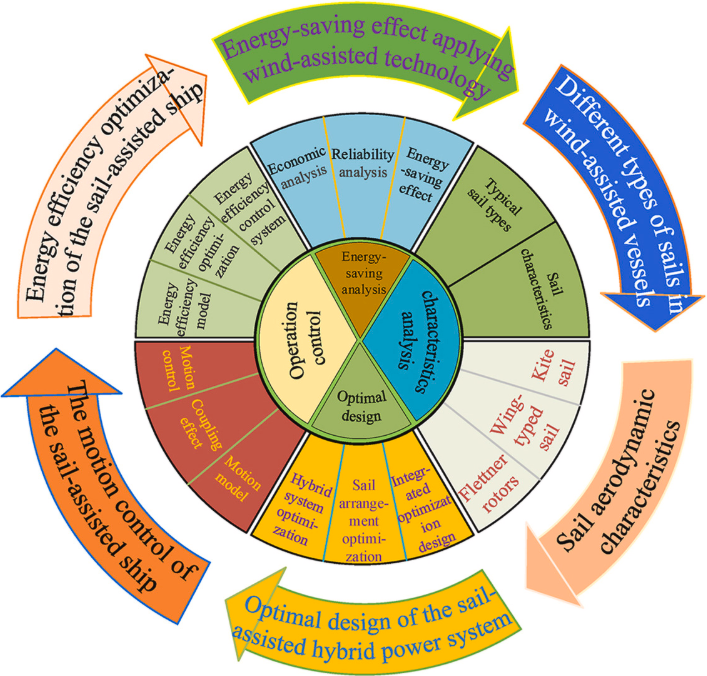
Rotor sails, also known as Flettner rotors, use the Magnus effect to generate thrust when rotating cylinders interact with oncoming wind. Their advantage lies in their predictability and automated control systems, which allow integration without significant operational disruption.
Moreover, rotor sails have demonstrated fuel savings between 5% and 25%, depending on vessel type, route, and prevailing wind. Large bulk carriers, tankers, and Ro-Ro ships are already deploying pilots, proving the technology’s scalability.
Despite these benefits, rotor sails require sufficient deck space, a stable power supply for rotation, and crew familiarization. Still, their retrofit potential makes them one of the most commercially viable wind-assist technologies available today.
2. Rigid and Soft Wing Sails
Wing sails work like aircraft wings, generating lift to propel vessels forward. They can be rigid, semi-rigid, or inflatable, providing flexibility tailored to vessel structure and operational needs. Their automated trimming systems reduce manual intervention and allow dynamic optimization based on weather routing.
Additionally, wing sails can reduce fuel use by up to 30% on suitable trade routes. Ferries, general cargo vessels, and short-sea carriers benefit the most due to frequent operational environments with consistent wind.
However, height restrictions near bridges, port maneuverability, and capital expenditure remain concerns. Even so, scalable designs are improving adoption, especially for regional and coastal fleets targeting rapid decarbonization.
3. Kite Propulsion

Kite propulsion systems deploy large aerodynamic kites that fly at high altitudes where winds are stronger and more stable. They can provide thrust independently or work alongside engines and other hybrid solutions. The kites are automatically controlled, reducing crew requirements and operational complexity.
One significant benefit is a minimal onboard footprint, making kites suitable for retrofitting on vessels with limited deck space. Moreover, when optimized, kites can deliver 10–20% fuel savings.
However, performance heavily depends on wind conditions, and deployment in congested shipping lanes may require additional regulation and monitoring. Even with operational constraints, kite technology remains promising due to its cost-effectiveness and compatibility with existing infrastructure.
4. Suction Wings (Ventifoils)
Suction wing systems use active airflow control to increase aerodynamic efficiency, generating more thrust with smaller surfaces. Their design blends features of wing sails and rotor sails, offering optimized performance, especially in cross-wind conditions.
Ventifoils operate automatically and consume minimal electrical power, enabling compatibility with hybrid propulsion strategies. Fuel saving potential ranges from 5–20%, depending on voyage patterns and vessel characteristics. Installation is straightforward, especially for multipurpose vessels and medium-sized ships operating on predictable trade lanes.
Although promising, suction wings require advanced maintenance and periodic cleaning for peak efficiency. As adoption grows, performance data is improving, supporting future standardization and scaling.
5. Integrated Wind-Optimized Routing
Wind-assisted technologies are most effective when paired with intelligent voyage routing. Digital platforms now model wind conditions, vessel resistance, hydrodynamics, and operational schedules to identify optimal paths.
This approach allows shipping operators to unlock higher fuel savings and predictability while maintaining compliance with commercial deadlines. Additionally, routing tools help support decision-making for vessel captains and shore-based teams, ensuring wind power is used efficiently rather than opportunistically.
However, integrating weather-dependent routing requires collaboration across fleet management, charter parties, and regulatory frameworks. Even with complexities, digital routing is becoming a necessary enabler for maximizing ROI from wind-assisted propulsion systems.
6. Operational and Regulatory Challenges
While wind-assisted propulsion offers measurable emission reductions, scaling is constrained by costs, certification frameworks, and port operational constraints. Installation requires capital investment, and performance varies across routes, requiring careful feasibility assessments.
Furthermore, global classification societies are still developing standardized guidelines, which can delay approvals and financing. Port infrastructure and operational clearance, especially for vessels with tall sails, must also evolve.
Despite these challenges, policy frameworks such as the EU ETS, FuelEU Maritime, and IMO carbon intensity regulations are accelerating interest. As compliance pressure grows, wind propulsion is transitioning from experimental technology to a strategic decarbonization tool.
Conclusion
Wind-assisted propulsion is not a standalone solution, but it represents a practical, increasingly scalable pathway to reduce emissions while the industry waits for fuel infrastructure to mature. Technologies such as rotor sails, wing sails, kites, and suction wings are proving that wind can support the transition toward cleaner shipping.
Although challenges exist, operational experience, regulatory support, and digital optimization are strengthening the business case. The maritime sector is entering a transformative decade, and wind propulsion offers momentum financially, operationally, and environmentally as the industry moves toward net-zero goals.


